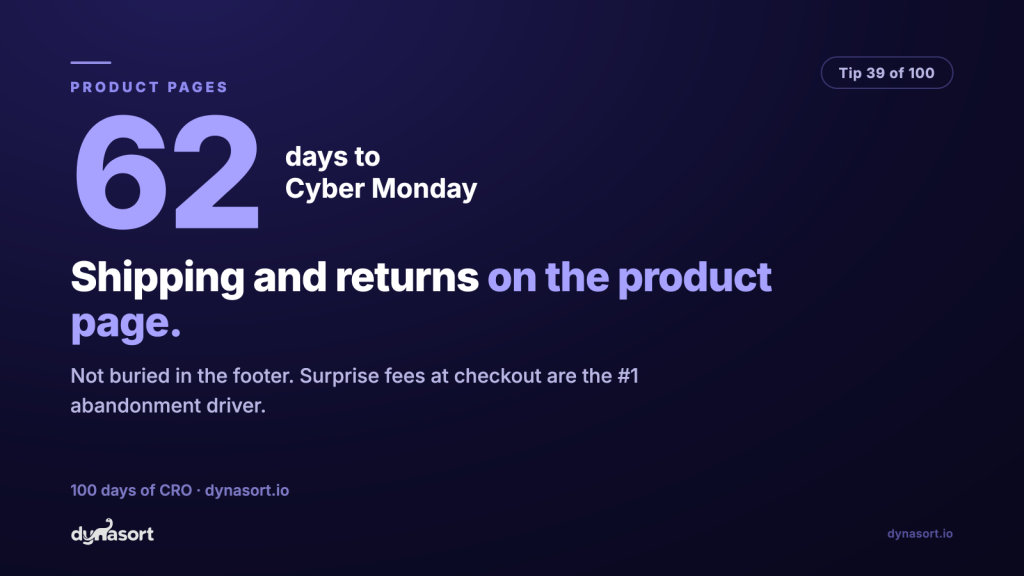
Shipping costs and returns policy belong on the product page, in plain sight, before the add-to-cart button gets tapped. Not in the footer. Not behind a “Shipping & Returns” accordion on page two of checkout. On the product page, where the buying decision actually happens.
The reason is the least mysterious statistic in ecommerce. Around 70 percent of carts are abandoned, and the number one reason shoppers give is extra costs, shipping, taxes and fees, that showed up too high at checkout. Read that carefully: the cost itself is only half the crime. The other half is surprise. The shopper built a mental price, your checkout broke the deal, and they punished you for it. People do not abandon carts because shipping costs $6. They abandon because they found out at the last possible second.
The footer does not fix this, and neither does your beautifully written policy page, because nobody on the way to a purchase goes on a document hunt. Information that is technically available but practically invisible is, for conversion purposes, hidden. If a fact changes the buying decision, it has to live where the decision is made.
What to put next to the buy button
- The shipping answer, in one line. “Free shipping over $75,” “Ships free,” or “$4.95 flat rate.” If your rates genuinely vary, give the honest floor: “Shipping from $4.95, calculated at checkout.” A real number beats a mystery every time.
- The returns answer, in one line. “Free 30-day returns” is not fine print, it is a selling point that removes the risk of the entire purchase. Stores with a generous policy that whisper it in the footer are paying for insurance and refusing to show the certificate.
- The speed answer, if you are fast. “Order by 2pm, ships today” converts anxious gift-buyers all through Q4.
One line each, small text, directly under the buy button, with a link to the long version for the lawyers. This costs you nothing to build and touches every product page on the store at once, which makes it one of the best effort-to-impact ratios in this entire series.
And if writing that shipping line out loud makes you wince, that discomfort is data: the problem is not where the fee is displayed, it is the fee. Sixty-two days out, there is still time to restructure toward a threshold-based free shipping offer (tip 9) before the biggest deal-hunting shoppers of the year arrive expecting one.