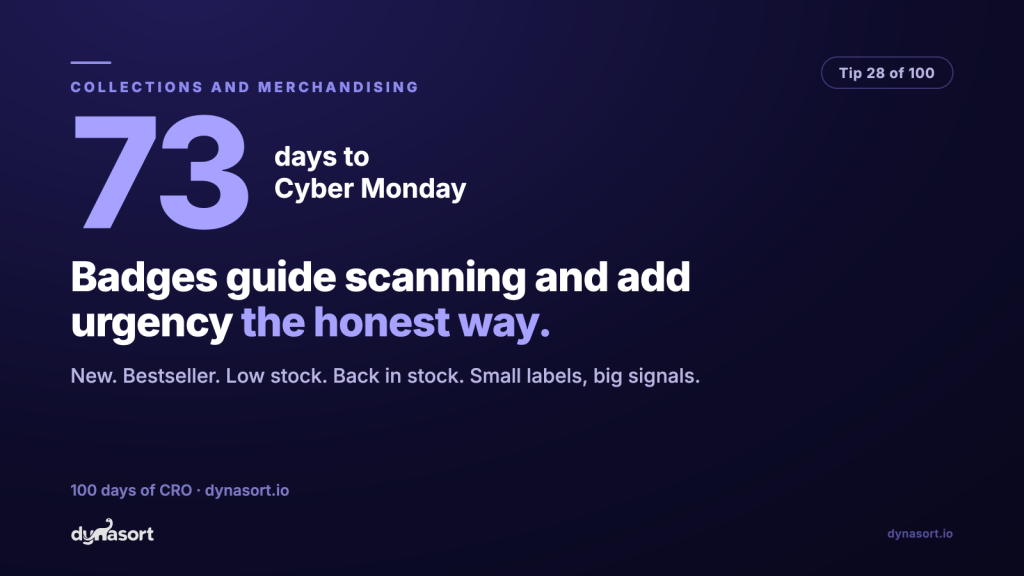
Product badges, the small “New”, “Bestseller”, “Low stock”, and “Back in stock” labels on collection cards, are wayfinding for a shopper who is scanning, not reading. A collection grid is thirty near-identical rectangles; the badge is your one chance to say “start here”, “others agreed”, or “decide soon” without a word of copy being read. Used honestly, badges are the cheapest urgency and social proof you can add. Used dishonestly, they are a trust incinerator with a nice font.
Each badge answers a different scanning question. New answers “what changed since my last visit” and keeps regulars exploring. Bestseller answers “what do people like me choose” and gives the overwhelmed shopper a default. Low stock answers “can I sleep on this” with an honest no. Back in stock is the sleeper hit: it converts the frustration of a previous visit into a reason to buy right now.
Signal vs noise
Same grid, two badge policies. A badge only points somewhere if most cards have none.
One badge per card, badges on a minority of cards, or the labels stop labeling anything.
The honesty rules
- Every badge needs a definition you would say out loud. “New” means added in the last 30 days. “Bestseller” means top 10% by units this quarter. “Low stock” means a real threshold, like under 10 units. If the rule embarrasses you, so will the badge.
- Badges must expire. A “New” badge from March is a small lie your whole catalog tells. Wire badges to the data (created date, sales rank, inventory level) rather than to a checkbox someone has to remember.
- Never fake scarcity. “Low stock” on a warehouse of 4,000 units works precisely once per customer. Shoppers screenshot, return, and remember.
- One badge per card. If a product is new AND a bestseller AND low on stock, pick the strongest story. Stacked badges read as shouting.
Most Shopify themes support badges natively via tags or metafields; check your theme settings before reaching for an app. Then set the definitions, automate the expiry, and let the little labels do what your sort order (tip 21) cannot: talk to the shopper mid-scan, honestly, in two words or less.