Risk reversal means taking the risk of the purchase off the shopper and putting it on yourself, and a bold, specific guarantee is the cheapest form of it in ecommerce. The fence-sitter’s problem is rarely the price. It is the private math of “what if it’s wrong for me?”: wrong size, wrong shade, wrong feel, plus the imagined ordeal of arguing with a stranger’s returns department. A discount shrinks the price side of that math. A guarantee deletes the risk side, which for a first-time buyer at an unfamiliar store is usually the bigger number.
But guarantees only work at full strength, and most stores run theirs at zero. “Satisfaction guaranteed” is not a guarantee, it is a shrug in serif font. Vague reassurance requires the shopper to imagine how the promise would actually play out, and an anxious shopper imagines the worst. A real guarantee is specific enough that there is nothing left to imagine.
A shrug vs a promise
Read both the way a skeptical first-time visitor does: what would returning this actually be like?
“Satisfaction guaranteed.”
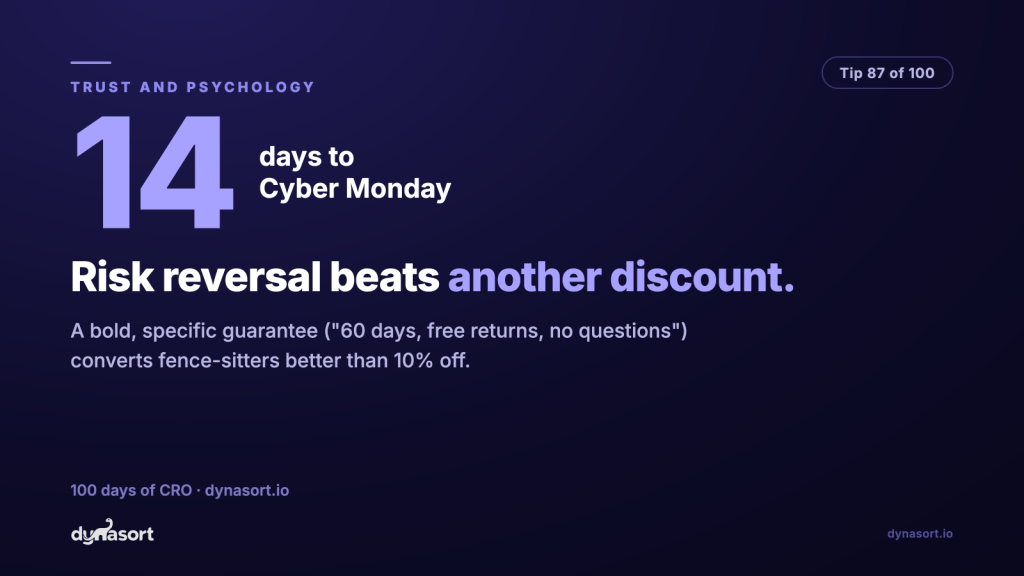
“60 days. Free returns. No questions asked.”
Specificity is the active ingredient. A guarantee you have to interpret is a guarantee you do not believe.
“But people will abuse it”
Some will. That is not a flaw in the strategy, it is the cost of goods for the trust you are buying, and for most stores the trade is lopsided in your favor: the guarantee works on every fence-sitter who sees it, while abuse comes from a thin sliver of buyers. You are underwriting a small, bounded loss to unlock a larger, compounding gain. If your margins genuinely cannot survive generosity, that is worth knowing, but decide it from your returns data, not from the loudest horror story in a merchant forum. And note what the bold guarantee quietly signals even to shoppers who never return anything: this store expects the product to survive scrutiny.
Ship it in the next two weeks
- Write it in one sentence with a number in it. Days, dollars, or both. If your current policy is already decent, this is a copywriting task, not a policy change: most stores hide a fine policy behind vague words.
- Extend the window through January. Gift buyers in November are silently asking “can they return it after Christmas?” Holiday-extended returns answer the question and match what big retailers have trained shoppers to expect.
- Put it where doubt lives. Near the add-to-cart button, in the cart, in the trust band from tip 79. A guarantee filed away on a policy page is insurance; a guarantee next to the buy button is a salesperson.
Fourteen days out, every competitor will be shouting percentages. A bold guarantee is the one offer on the page that costs you nothing at checkout and says the thing a discount never can: we are sure. Say it like you mean it, with a number.