Answer engine optimization (AEO) is how your store gets cited when a shopper asks ChatGPT, Perplexity, or Gemini “what is the best insulated water bottle under $50” instead of typing it into Google. Those questions are being asked right now, in volume, and the answers name specific stores and products. Either the assistant can find, parse, and trust your pages, or it recommends someone else with a straight face.
The good news, and the mild anticlimax: AEO is not a bag of new tricks. It is SEO with the tolerance for ambiguity removed. A human squints past your inconsistencies. An answer engine does not squint; it either extracts a clean fact from your page or it moves on to a page where the fact is clean. Three things determine which side of that line you land on.
1. Category pages that state their case
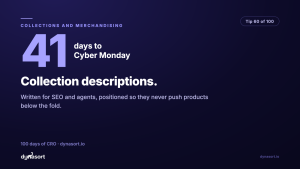
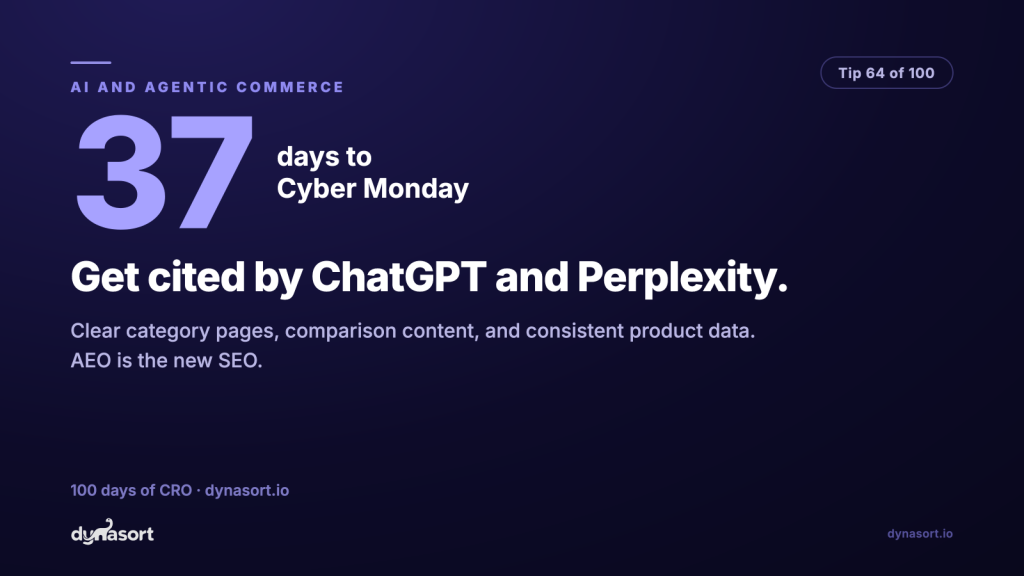
When an assistant assembles a recommendation, it leans on pages that define a category and say who each option is for. A collection page that says “Insulated bottles: 12 to 64 oz, keeps drinks cold 24 hours, from $28” is quotable. A bare grid with the title “Bottles” is invisible. This is exactly the split-description pattern from tip 60: the explanatory text lives below the product grid, written in plain declarative sentences, answering the questions a buyer would ask. If your category page could not be read aloud as an answer, it will not be borrowed as one.
2. Comparison content nobody else will write
The queries assistants get are comparative by nature: best X for Y, X vs Z, is X worth it. Pages that honestly compare, including your own products against each other (“which of our three jackets for which winter”), are disproportionately cited because they match the question’s shape. Here is the part that takes nerve: honest comparison content admits what each option is not good for. That admission is precisely what makes an engine, and a human, trust the rest of the page. A comparison where your product wins every row is an ad, and everyone’s parser knows it.
3. Product data that agrees with itself
Consistency is the unglamorous core of AEO. The price in your structured data, your page copy, and your feed must match. Sizes, materials, and availability must be filled in, not “see description.” Shopify emits schema.org Product markup from most themes automatically, which means the floor is already under you; your job is making sure the data flowing into it, titles, variants, metafields, prices, is complete and coherent. An assistant that finds one contradiction on your page discounts everything else it found there. Machines hold grudges at scale.
Then check your work: ask three assistants your own money questions (“best [your category] for [your ideal customer]”) and see who gets named. If it is not you, the transcript usually shows you why, and it is nearly always one of the three gaps above. AEO is the new SEO in the only sense that matters: the stores that treated it as real two years early collected the compounding returns last time, too.