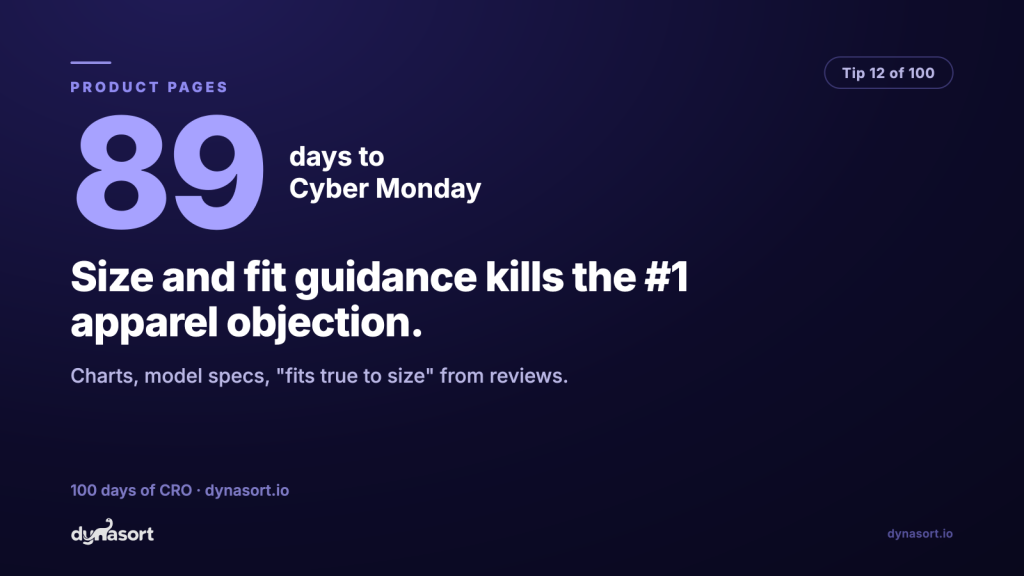
Size and fit guidance is the highest-leverage copy on an apparel product page, because “will it fit me?” is the objection that stops more clothing purchases than price. It is also the objection that drives returns when shoppers guess wrong, which means fixing it pays you twice: once at checkout and again at the returns desk.
Watch what an undecided apparel shopper actually does. They open the size chart, squint at centimeters, open a second tab to find a tape measure conversion, look at the model, wonder how tall she is, and then do the thing that quietly wrecks apparel economics: order two sizes with the plan of returning one. Or they do nothing at all, which your analytics files under “abandoned.”
The three layers of fit confidence
- A real size chart, in the buyer’s units. Garment measurements, not just S/M/L, reachable in one tap from the size selector, not buried in the footer. If you sell across regions, show both unit systems. This is table stakes, and plenty of stores still fail it.
- Model specs on every photo set. “Maya is 5’9″ and wears a size S” turns a pretty picture into a data point. Two models of different sizes in the same garment is twice the data and rare enough to feel premium.
- Fit verdicts from people who paid. “Fits true to size,” “size up if between sizes,” pulled from your reviews. Review apps like Loox and Judge.me can collect a fit question at review time and display the aggregate right on the PDP. A hundred customers voting “true to size” beats any chart you could draw.
That third layer is the one most stores skip, and it is the strongest of the three. It is also sitting in text you already own: run your reviews through the tip 8 prompt and the fit consensus falls out, product by product, in your customers’ own words. “Snug in the shoulders, size up for layering” is a sentence no brand copywriter would dare write and every shopper trusts instantly.
One rule above all: be honest about unflattering truths. If the cut runs small, say “runs small, order a size up” in bold near the selector. It feels like admitting a flaw. It is actually removing a return, and shoppers reward stores that save them from a mistake. The goal of fit content is not to flatter the garment; it is to get the right size into the first box, because the exchange-and-refund shuffle is where apparel margin goes to die.
Not selling apparel? The objection generalizes: rugs need room-scale photos, furniture needs “will it fit through my door” dimensions, skincare needs shade and skin-type guidance. Every category has a “will it fit my life” question. Answer it where the doubt forms, before the shopper opens that second tab.