SEO for large ecommerce sites is mostly an architecture problem. With thousands of products, search engines cannot crawl, index and rank every URL equally, so the sites that win decide deliberately which pages deserve crawl attention, which get consolidated, and which stay out of the index entirely. This guide covers the decisions that matter at scale: collection structure, faceted URLs, near-duplicate products, structured data, and what to measure.
- At thousands of URLs, crawl budget is real: every junk URL indexed is a good URL crawled later.
- Collection pages are your SEO middle layer; keep every product within about three clicks of the home page.
- Faceted and filtered URLs are the biggest index-bloat source on big stores; canonicalize by default, index only facets with real search demand.
- Product order on collection pages is not a ranking factor, so merchandise freely.
Why Is SEO Different for Large Ecommerce Sites?
A 50-product store can ignore crawl efficiency; Google will find everything. At 10,000 products with variants, filters and pagination, the URL count explodes into the hundreds of thousands, and search engines allocate finite attention per site. The result: on large sites, SEO wins come less from writing more content and more from concentrating authority and crawl attention on the pages that can actually rank, which is an architecture and hygiene discipline.
How Should Collections Structure a Large Catalog?
Collections are the middle layer that makes a big catalog crawlable: they aggregate internal links, they match the category-level queries people actually search, and they pass authority down to products. The working rules: create sub-collections where search demand exists (your query data and search logs tell you), give each one a real description (placed so it never pushes products below the fold), keep breadcrumbs on, and prune collections that nothing links to. A collection Google cannot reach through links is a page it will treat accordingly.
What Do You Do About Faceted and Filtered URLs?
Filters multiply URLs faster than anything else on an ecommerce site: size times color times price times availability, per collection. Indexing them all buries your real pages in near-duplicates. The default posture: filtered and sorted URL variants canonicalize to the base collection, and only facets with genuine standalone search demand (a “red running shoes” of your world) get promoted to real, indexed collection pages with their own content.
Shopify handles much of this sanely out of the box (parameter URLs canonicalize to the base collection), but themes and apps that build filter links can undo it. Audit what your filter UI actually emits. [VERIFY current Shopify default canonical behavior on filtered URLs before publish]
Does Collection Sort Order Affect SEO?
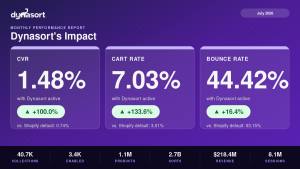
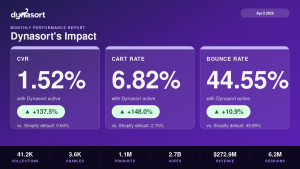
No, and this question stops a surprising number of merchants from merchandising at all. Product order on a collection page is not a ranking factor for the page: reordering changes neither the URL, the title, nor the indexed content that matters. Re-sort as often as your data justifies. The full reasoning is in does collection sorting affect SEO; the short version is that sort order is a conversion lever, not a rankings one, and across stores running Dynasort that lever was worth a 92.65% conversion difference in June 2026.
How Do You Handle Near-Duplicate Products?
Large catalogs breed near-duplicates: the same jacket in five colorways as five products, regional variants, bundle SKUs. Every near-duplicate splits authority and competes with itself. Consolidate where the products are genuinely one thing (Shopify’s combined listings exist for exactly the colorway case; we wrote up how combined listings work), differentiate the copy where they are not, and keep one canonical winner where neither applies.
What About Structured Data at Scale?
Product schema (price, availability, ratings) is table stakes for rich results, and at scale it must come from the template, not per-page effort: audit a sample of product and collection pages with a rich results tester rather than trusting the theme. The same structured cleanliness now feeds a second audience: AI shopping assistants read product data, availability and reviews to decide what to recommend, and a store with clean structured data plus a permissive robots policy is simply easier to recommend. That layer costs nothing on Shopify and is where discovery is heading.
What Should You Measure on a Large Site?
Segment Search Console by page type: home, collections, products, blog. Watch impressions and average position per segment, not sitewide averages that blend everything into noise. Index coverage tells you whether the architecture is working (indexed pages should be the pages you chose); the queries-per-collection view tells you which sub-collections earned their existence and which facets deserve promotion to real pages next.
Frequently Asked Questions
Does re-sorting products frequently hurt SEO?
No. Order changes on a collection page do not affect the page’s rankings, and crawlers see reordered grids on big retail sites constantly. Merchandise on your schedule, not Google’s.
How many collections is too many?
There is no fixed number; the test is whether each collection has search demand or navigation purpose, a real description, and internal links pointing at it. Collections failing all three are index bloat wearing a nice URL.
Should filtered pages ever be indexed?
Only when a specific facet has standalone search demand, and then as a proper collection page with its own title, description and links, not as a raw parameter URL.
Dynasort keeps large catalogs merchandised without touching your URLs, titles or theme. Install it from the Shopify App Store or see how it works.